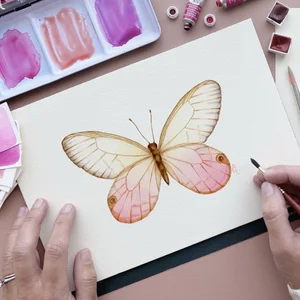
Why Butterflies and their Symbolism Keep Calling Me Back
There is something about butterflies that stops you mid-thought. A flicker at the edge of your vision that makes you turn your head, almost like a spell. I have been turning my head towards butterflies my whole life. And it seems I am not alone. Across centuries, people have looked at butterflies and seen something beyond their beauty. They have seen hope, resilience and the possibility that something beautiful can come from struggle.
I could not tell you exactly when my own story with butterflies began, but I know where it lives in my memory: my father and his camera, following flowers, leaves, and tiny wings through the garden.
MY STORY
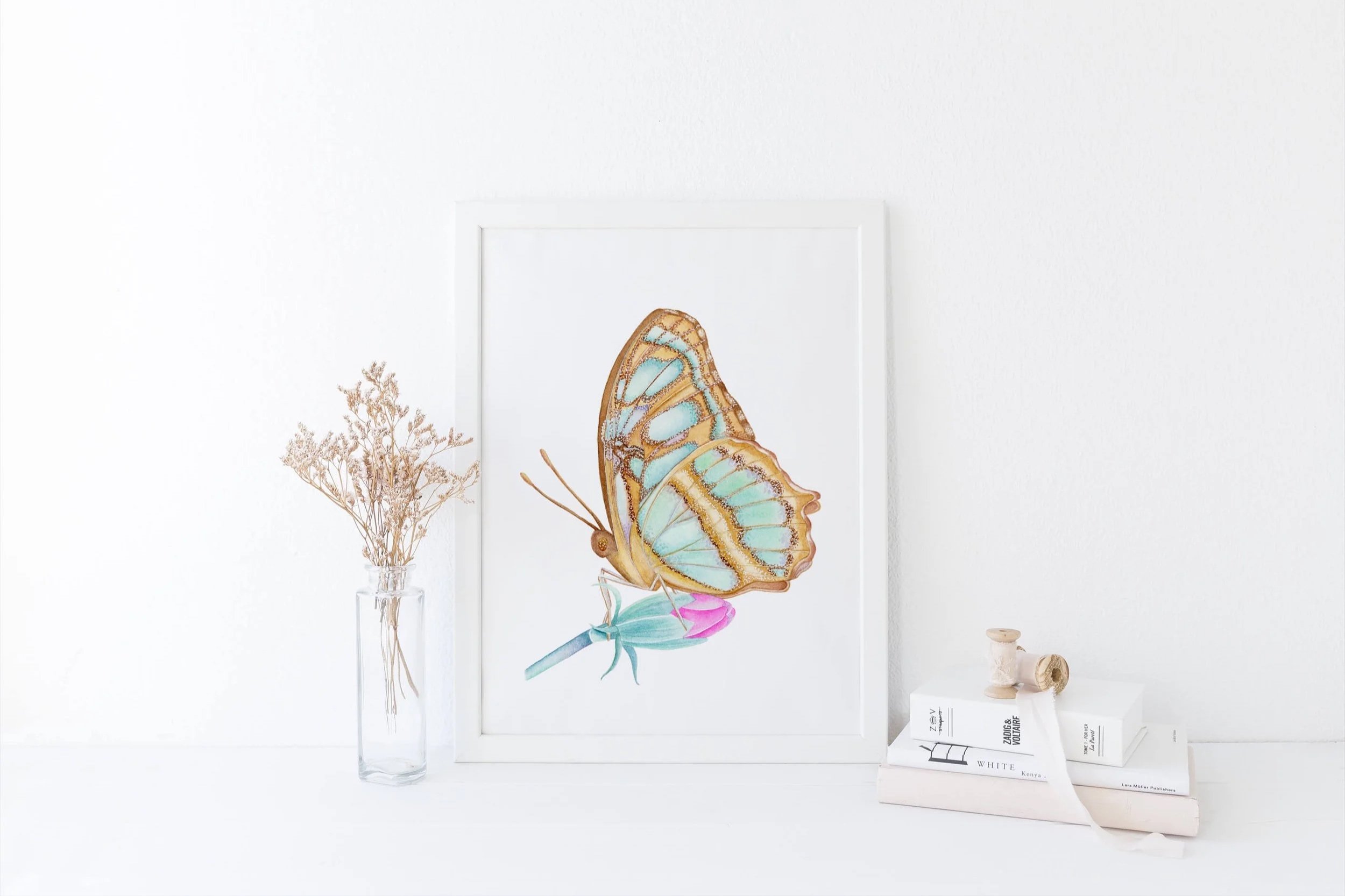
My father was a hobbyist photographer, someone who picked up his camera simply because he loved what he saw. He had his own darkroom, developed his own film, and looking back, I think that space represented to him what my art studio represents to me today: a doorway to Wonderland. He photographed whatever moved him: a flower in our garden, an insect resting on a petal, a sunset blending colours in the evening sky. Butterflies were among the subjects that caught his eye, part of a wider and instinctive connection to the natural world and all its beauty.
Watching him, I absorbed something important without realising it: that nature is full of surprises, and some of the most beautiful things around us are small, fleeting, and easy to miss. Perhaps that is why I paint what I paint. Every subject I choose is linked to a feeling I want to explore, understand, or share. My father found that feeling through a lens. I found it through watercolour. In many ways, we were both looking for the same thing.
BEYOND BEAUTY
Long before butterflies found their way into artists’ studios and galleries, they had already found their way into our hearts.
In ancient Egypt, they were linked to the Ba, the part of the soul believed to move freely between the living world and what lies beyond, and butterfly images appeared in hieroglyphs, tomb paintings, and palace floors as symbols of rebirth. In Greece, the word psyche carried two meanings at once: butterfly and soul. Psyche, the goddess of the soul, was depicted as a woman with butterfly wings, as though the Greeks could not think of one without the other.
Today, across many cultures, the symbolism has remained remarkably consistent. Butterflies are seen as messengers of hope, new beginnings, and reminders that change, however painful or uncertain, holds the possibility of something beautiful on the other side.
THE METAMORPHOSIS
Most people know that caterpillars become butterflies, but the metamorphosis is far more extraordinary than many realise.
Inside the chrysalis, the caterpillar does not gradually grow wings, it dissolves. Its body breaks down almost entirely before rebuilding itself into a completely different creature. There is an ending, and then there is a new beginning, the two are not separate events. One makes the other possible.
That feels like a more honest version of transformation than the polished story we usually hear. Becoming takes time, change can be uncomfortable, disorienting, and most of it happens out of sight, in the darkness of the cocoon that once kept us safe but no longer fits who we are becoming.
Transformation also changes the way we experience the world. Caterpillars have very simple vision and can only notice contrast between light and dark. Butterflies, instead, can see ultraviolet light, wavelengths completely invisible to the human eye. Difficult chapters in life often work the same way: they shift our perception, what we notice, what we value, and what we choose to hold close.
FLEETING, AND THEREFORE PRECIOUS
Most butterflies live for only a few weeks. The Monarch is a rare exception, able to live several months and complete migratory journeys spanning thousands of kilometres. For most species, though, life is brief, and perhaps that is what makes their presence feel so meaningful. A nudge to stay present, to notice what is around us rather than dwelling on the past or worrying about what has not happened yet.
That sense of fleeting beauty has drawn artists to butterflies for centuries. Maria Sibylla Merian, working in the 17th century, created some of the most precise studies of butterflies and their life cycles ever made. Her illustrations are both scientific records and deeply moving works of art, and they are some of my absolute favourites. Van Gogh painted them amongst poppies with the same intensity he brought to everything he observed. In a letter to his friend Emile Bernard, he wrote about the possibility of transformation after death, comparing it to a caterpillar becoming a butterfly: the idea that on the other side, things we cannot even imagine become possible. And Odilon Redon, a Symbolist artist, took a different path. Through his late work he painted butterflies in ethereal, dreamlike compositions, where they seem to belong to another realm. Each arrived at butterflies for their own reasons: observation, emotion, symbolism. Yet all recognised the same pull.
WHEN I PAINT A BUTTERFLY
With over 17,000 known species, each with their own patterns, colour palette and character, it is safe to say there are enough butterflies to keep me inspired for a lifetime! But for me, painting them is more than just capturing their beauty, it is what they represent that keeps calling me back. The idea that transformation is not always easy, but it is possible, and that hope can bloom even after a difficult season, sometimes when you were not expecting it at all.
Living in Abu Dhabi, I am lucky to spot various butterflies on many of my walks, and I notice how they hover from flower to flower, constantly having to choose where to land, when to move on, and how to stay safe. It makes me think how in a way, we all have to make similar decisions as we navigate life, adjusting, adapting, and finding our way forward as circumstances change.
Whatever butterflies mean to you, positivity, hope, resilience or new beginnings, I love the idea that a small pair of wings can hold that story.
That feels worth painting.
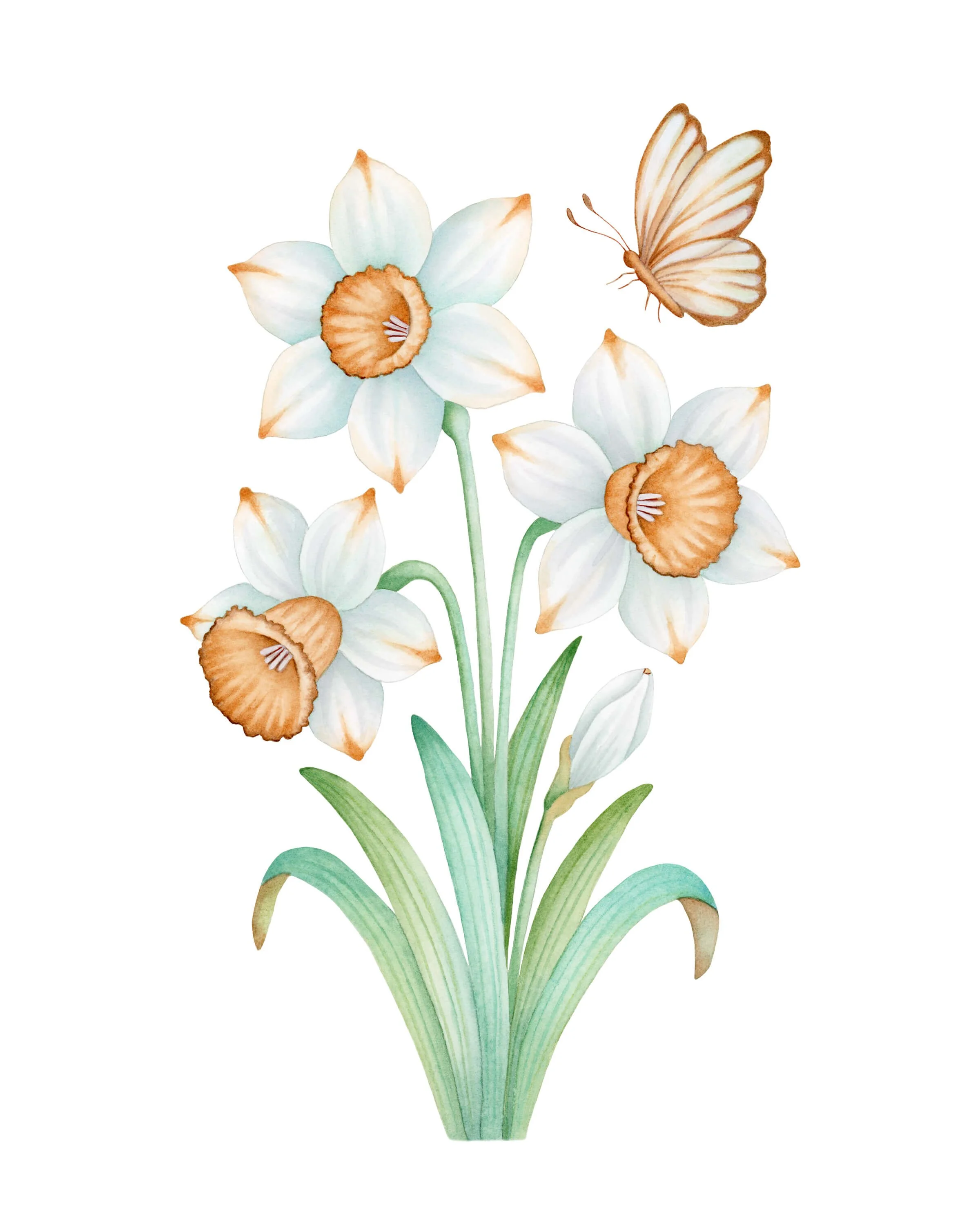
One of my paintings: Where Hope Blooms - Watercolour on paper, 9x12 inch.
In Where Hope Blooms, daffodils appear as luminous signs of new life, accompanied by a butterfly that feels like a small messenger of change. The daffodils, among the first flowers to bloom after winter, symbolise resilience and the promise of brighter days ahead, while the butterfly adds to the sense of transformation and new beginnings. With this piece, I wanted to capture not only a change in season, but an emotional shift: the return of light, colour, and hope. A reminder that seasons do change, even when it does not feel like they will.